
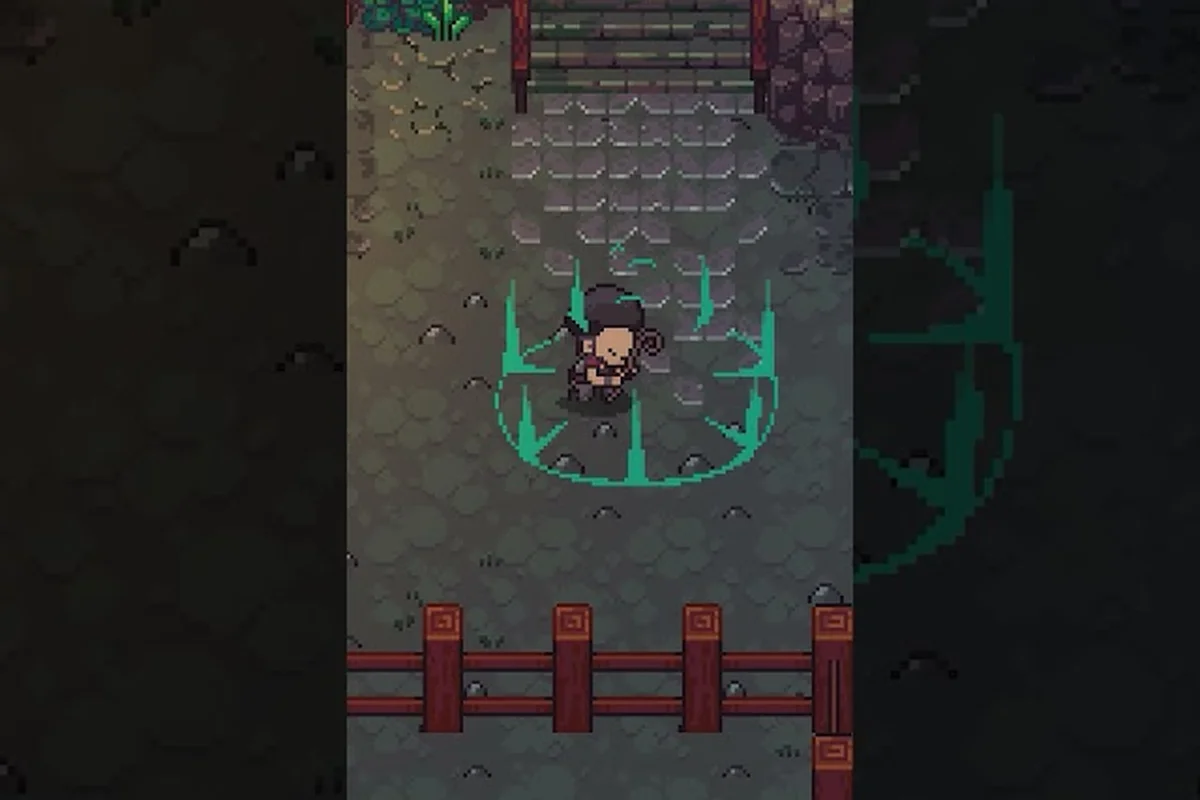
Blending two Emberville classes into a single Emberville hybrid class lets you break free from the rigid single-class templates and craft a build that actually fits how you fight. According to the Knight Class showcase, the game lets players learn skills from leveling multiple classes and tailor the active combat class around a unique playstyle — which is exactly the hook this guide is built around.
What a Hybrid Class Actually Is in Emberville
A hybrid class in Emberville is not a preset you pick at the character screen. It is a self-built combat identity that emerges when you spend Emberville skill points across two class trees simultaneously, then equip active skills from both into your weapon-bound action bar. Because the Emberville skill tree is split per class, the hybrid only works once you have unlocked at least two classes — a step that happens naturally as you level, swap, and inherit from prior classes (see Emberville class swap and inherited skills for the full inheritance loop).
The way the system is described by the Cygnus Cross announcement on Terminals makes the design intent clear: "Learning skills from leveling multiple classes allows the player to tailor the active combat class for a unique playstyle." That tailoring is what every hybrid is trying to optimize, and it is why the rest of this guide focuses on routing rather than picking a "best" class.
Core Definitions You Need Before Building
-
Active skill — a button-bound ability tied to your currently equipped class. Hybrids equip actives from two different trees, which is what creates Emberville cross class skills.
-
Passive skill — a stat or effect that stays active regardless of which class is currently slotted, which is the backbone of any hybrid Emberville skill tree plan.
-
Emberville skill points — earned per class level, spent within that class's own tree. Points do not transfer between trees, so a hybrid needs level-ups in two classes.
-
Respec — a full reset of points in a single tree, with a currency cost. Knowing Emberville how to respec cheaply is part of every build guide.
The practical upshot: a hybrid is a point-allocation strategy first and a gear strategy second. Your weapon still matters (covered in Emberville weapon upgrades and mastery), but the defining choices happen in the trees.
Why a Hybrid Is the Strongest Build Pattern in Early Access
In a single-class build you cap out one identity — full Knight, full Mage, full Rogue. Hybrids are stronger in raw utility because every point in a second tree multiplies the value of your first tree through Emberville class combos. Two actives that interact — like a Knight taunt that pulls an enemy into a Mage frost nova — turn normal fights into trivial ones, and those interactions are the actual currency of power in this game.
Tradeoffs You Should Accept Up Front
| Aspect | Pure Single Class | Emberville Hybrid Class |
|---|---|---|
| Early-game speed | Fast, one tree maxed by level 15 | Slower, points spread across two trees |
| Mid-game ceiling | Plateaus around skill rank 4 | Climbs because two trees stack passives |
| Late-game scaling | Linear, single-stat focused | Multiplicative, combos drive damage |
| Gear dependency | High — needs full class set | Medium — combo values bridge gear gaps |
| Respec cost over a run | Low | Higher — two trees means two resets if you mis-route |
| Skill ceiling | Easy to learn, shallow to master | Steep at first, very deep once unlocked |
A common community report is that hybrid players who plan their second tree after unlocking class rank 2 out-damage single-class players in every Vitromotus expedition past the second boss. That tracks with the design — two trees means you always have an answer, while a pure class sometimes just has a strong answer to half the threats.
Choosing Your Two Base Classes
The hybrid only works if your two chosen classes share at least one damage type or one control archetype, otherwise your Emberville class combos will feel like two separate characters fighting the same body. Below is the pairings matrix that players settle on most often during Early Access testing.
Tier-List of Hybrid Pairings
| Primary Class | Secondary Class | Combo Archetype | Difficulty | Notes |
|---|---|---|---|---|
| Knight | Mage | Frontline + Control | Beginner | Taunt pulls enemies into AoE frost, very forgiving |
| Knight | Rogue | Bruiser + Burst | Intermediate | Stunlocks single targets, struggles in wide fights |
| Mage | Cleric | Ranged + Sustain | Intermediate | Healing and shields let mages stay in damage range |
| Rogue | Ranger | Burst + Kiting | Advanced | Glass cannon, requires positioning mastery |
| Cleric | Knight | Tank + Support | Beginner | Great for co-op, slow solo clear times |
| Ranger | Mage | Kiting + Control | Advanced | Highest single-target, weakest in crowds |
| Warrior | Rogue | Pressure + Burst | Intermediate | Strong Emberville class combos through stance dancing |
For first-time hybrids, Knight + Mage is the safest pick because the two trees share the stagger damage archetype. The Knight's shield bash and the Mage's frost ring both apply stagger stacks, and a staggered enemy takes amplified damage from all sources. This makes the Knight/Mage hybrid the most reliable Emberville hybrid class for solo players learning the system.
For an overview of every class and how they unlock, the Emberville class guide lists all base classes, unlock conditions, and rank-up requirements. Reading that before you commit to a second class saves one full respec cycle.
Routing Emberville Skill Points Across Two Trees
A hybrid only beats a pure class if you stop spending Emberville skill points like a pure class. The point-allocation plan below is the one most Early Access players settle on after a few restarts. It assumes a 40-point early-game budget and the first respec window.
Recommended 40-Point Hybrid Route (Knight + Mage)
| Level | Points Into | What You Get | Why This Order |
|---|---|---|---|
| 2 | Knight: Defensive Line 1 | +12% block, +5% HP | Survivability first, you die in Vitromotus otherwise |
| 4 | Knight: Taunt 1 | 3s taunt, small AoE | First combo anchor |
| 6 | Mage: Frost Ring 1 | 2m AoE slow, 4s duration | Gives taunted enemies a 4s damage window |
| 8 | Knight: Shield Bash 1 | Stagger stack + interrupt | Second combo anchor, also unlocks later shield nodes |
| 10 | Mage: Frost Ring 2 | Slow extends to 6s | Extends combo window |
| 12 | Knight: Defensive Line 2 | +18% block, +10% HP | Survives the Act 2 spike |
| 14 | Mage: Arcane Bolt 1 | Ranged poke, +frost synergy | Range option when shield is on cooldown |
| 16 | Knight: Taunt 2 | Taunt radius doubles | Combo coverage grows |
| 18 | Mage: Frost Mastery 1 | Frost Ring applies 1 stagger per tick | Now a real damage combo, not just a slow |
| 20 | Knight: Shield Wall 1 | 4s invuln, breaks on hit | Emergency button, also great for boss uptime |
After level 20 the route is flexible: most players dump the next 10 points into either Frost Ring 3 or Knight's Counter, depending on whether their next boss rewards patience or aggression. Frost Ring 3 extends the Mage's slow duration to 8s and adds a 15% shatter bonus against frozen targets, which is huge for the Vitromotus encounter where sustained kiting beats burst windows. Knight's Counter, on the other hand, is the pick for the Act 3 brute-tier bosses like the Grievewarden, since each blocked hit during Defensive Line 2's uptime converts into bonus stagger damage. If you're running a full 40-point hybrid build, take Frost Ring 3 first against ranged or AoE bosses and Knight's Counter first for the heavy single-target fights, then respec at the Wellspring shrine if the encounter list flips.
How to Spend Points When You Hit a Respec Window
The single biggest mistake hybrids make is treating the respec as a luxury. Because a hybrid draws from two class trees in the Emberville skill tree, every refunded point costs roughly 1.4× what a pure class pays, and the act-end full respec can climb past 800 currency if you've spread points across the Emberville cross class skills branches — so learning Emberville how to respec cheaply and triggering it on schedule (one act-end pivot, not a mid-act panic refund) is what separates a good hybrid from one constantly restarting at the level-30 soft cap.
| Trigger | What to Respec Into | Expected Cost | Payoff |
|---|---|---|---|
| Hit a wall at boss X | Push 5 points into survivability tree | Low (under 200 currency) | Clears the wall, then re-route |
| Unlocked new class rank | Drop 3-4 off weakest nodes, push 1 key passive | Medium (300-500) | Enables new combo |
| End of Act 2 | Full respec into late-game tree | High (800+) | Massive power spike |
| Found a key weapon | Small respec to match weapon scaling | Low | Weapon finally feels right |
Respec costs scale with the number of points refunded, which is why a hybrid pays roughly 1.4× per point compared to a pure class — a mid-act panic refund of even 6 points can cost 350-400 currency, while saving the rebuild for the act-end window lets you lump the cost into one 800+ transaction and re-route the full hybrid split between Emberville cross class skills branches in a single pass. Plan the spend so you only respec once per act, not every level.
Building Emberville Class Combos That Actually Work
A combo is two skills that interact in a way that produces more value than the sum of their parts. The Emberville class combos that work in Early Access cluster around a small set of patterns, and once you see them you can build your own.
Combo Patterns to Look For in Every Tree
-
Setup → Payoff — skill A applies a status, skill B consumes it for bonus damage. Example: Knight's Shield Bash applies stagger, Mage's Frost Ring deals bonus damage to staggered targets.
-
Zone → Force — skill A creates a hazard zone, skill B forces enemies into it. Example: Mage's Frost Ring + Knight's Taunt, the headline combo above.
-
Buff → Window — skill A grants a damage bonus, skill B exploits the window. Example: Cleric's Blessing (+20% damage for 5s) + Rogue's Backstab (3x damage from behind).
-
Crown Control → Burst — skill A locks an enemy in place, skill B dumps single-target damage. Example: Ranger's Snare + any mage nuke.
-
Sustain → Repeat — skill A heals or shields, skill B is your main damage spender that you can now cast twice. Example: Cleric's Regeneration + Mage's Arcane Bolt.
Every hybrid you build should aim to include at least two of these patterns, and the strongest Knight/Mage loadouts layer them for compounding payoff. Zone → Force (Taunt pulling enemies into Frost Ring) applies a 3-second slow, which then feeds Setup → Payoff via Shield Bash's stagger letting Frost Ring detonate its mastery bonus for roughly 2.4x base damage. Stacking a third pattern like Buff → Window during the same cooldown window pushes that burst past most boss health gates before sustain ticks recover the lost HP.
Common Hybrid Mistakes and How to Avoid Them
After watching dozens of Early Access runs, the same mistakes show up in nearly every failed hybrid — most commonly dumping 4+ points into a single cross class skill tree branch before hitting Level 10, ignoring emberville hybrid class synergy prerequisites, or burning emberville skill points on passives that don't unlock until Tier 3. They are all fixable through a free respec at the Waystone in Act 2, but only if you catch the misallocation in the first 10 levels, after which the refund penalty scales to 15% per point.
Mistake Table
| Mistake | What Happens | Fix |
|---|---|---|
| Spreading points across 3 classes | Each tree stays shallow, no combo forms | Lock to 2 classes, period |
| Ignoring passives from the second tree | Combo works but you die in 3 hits | Spend 3-5 points on the second tree's defensive passives |
| Respec only at endgame | Stuck in a dead build for 15 hours | Respec on schedule, see the table above |
| Equipping actives you never use | Wasted slots, slower muscle memory | Audit your bar after every 4 levels |
| Copying a meta build blindly | Doesn't fit your weapon or playstyle | Build around the weapon, not the other way around |
| Saving skill points for "later" | Levels come fast, the points bank fills up | Spend within 1-2 levels of earning them |
If you internalize those six rules you will skip 80% of the reroll cycle that most hybrid players go through. The other 20% is just learning the timing of your two-tree rotation, which only comes from running Vitromotus with the build.
Frequently Asked Questions
Is the Emberville hybrid class better than a single class?
In most cases, yes. A hybrid Emberville hybrid class build that uses Emberville class combos outperforms a pure class past level 20, because two trees stack passives and produce combo multipliers a single tree cannot. The tradeoff is slower early-game power because Emberville skill points are split.
What are Emberville cross class skills?
Emberville cross class skills are active abilities you unlock in one class's tree and equip while another class is your active combat class. They are the literal mechanism that makes a hybrid work — without them, switching classes would reset your action bar.
How do I respec in Emberville?
Visit the Mirror of Reflection in the rebuilt estate hub after unlocking the second-floor study. The first respec per act is discounted, and full refunds cost scaling currency. Knowing Emberville how to respec on schedule is essential because hybrids refund two trees, not one.
Can I run a hybrid with three classes?
Technically yes, but the Emberville skill tree per class only goes so deep, so spreading Emberville skill points across three trees leaves every tree too shallow to form combos. Most community testing finds that two classes is the sweet spot and three is a trap for new players.
What is the easiest hybrid for beginners?
Knight + Mage is the easiest Emberville hybrid class because both trees share the stagger archetype, the taunt-into-frost combo is intuitive, and both classes have strong defensive passives that forgive positioning mistakes. Cleric + Knight is the second easiest and is the best pick for co-op play.